Binary Tree Inorder Traversal
LeetCode 94 | Difficulty: Easy
EasyProblem Description
Given the root of a binary tree, return the inorder traversal of its nodes' values.
Example 1:
Input: root = [1,null,2,3]
Output: [1,3,2]
Explanation:
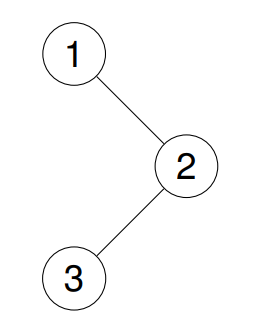
Example 2:
Input: root = [1,2,3,4,5,null,8,null,null,6,7,9]
Output: [4,2,6,5,7,1,3,9,8]
Explanation:
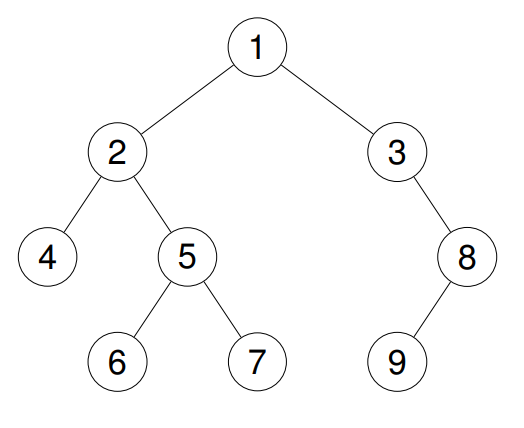
Example 3:
Input: root = []
Output: []
Example 4:
Input: root = [1]
Output: [1]
Constraints:
- The number of nodes in the tree is in the range `[0, 100]`.

- `-100 <= Node.val <= 100`
Follow up: Recursive solution is trivial, could you do it iteratively?
Topics: Stack, Tree, Depth-First Search, Binary Tree
Approach
Tree DFS
Traverse the tree recursively (or with a stack). At each node, decide: what information do I need from the left/right subtrees? Process: go left → go right → combine results. Consider preorder, inorder, or postorder traversal based on when you need to process the node.
Path problems, subtree properties, tree structure manipulation.
Stack
Use a stack (LIFO) to track elements that need future processing. Process elements when a "trigger" condition is met (e.g., finding a smaller/larger element). Monotonic stack maintains elements in sorted order for next greater/smaller element problems.
Matching brackets, next greater element, evaluating expressions, backtracking history.
Solutions
Complexity Analysis
| Approach | Time | Space |
|---|---|---|
| Tree Traversal | $O(n)$ | $O(h)$ |
| Stack | $O(n)$ | $O(n)$ |
Interview Tips
- Start by clarifying edge cases: empty input, single element, all duplicates.
- Consider: "What information do I need from each subtree?" — this defines your recursive return value.
- Think about what triggers a pop: is it finding a match, or finding a smaller/larger element?